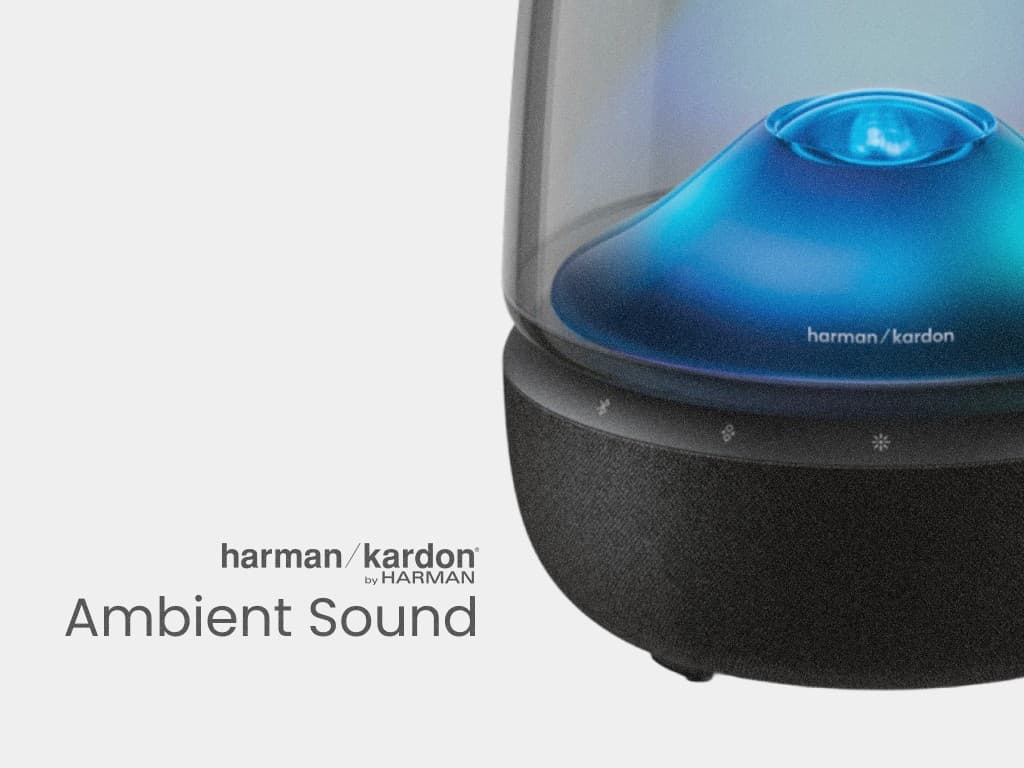
Ambient sound engine
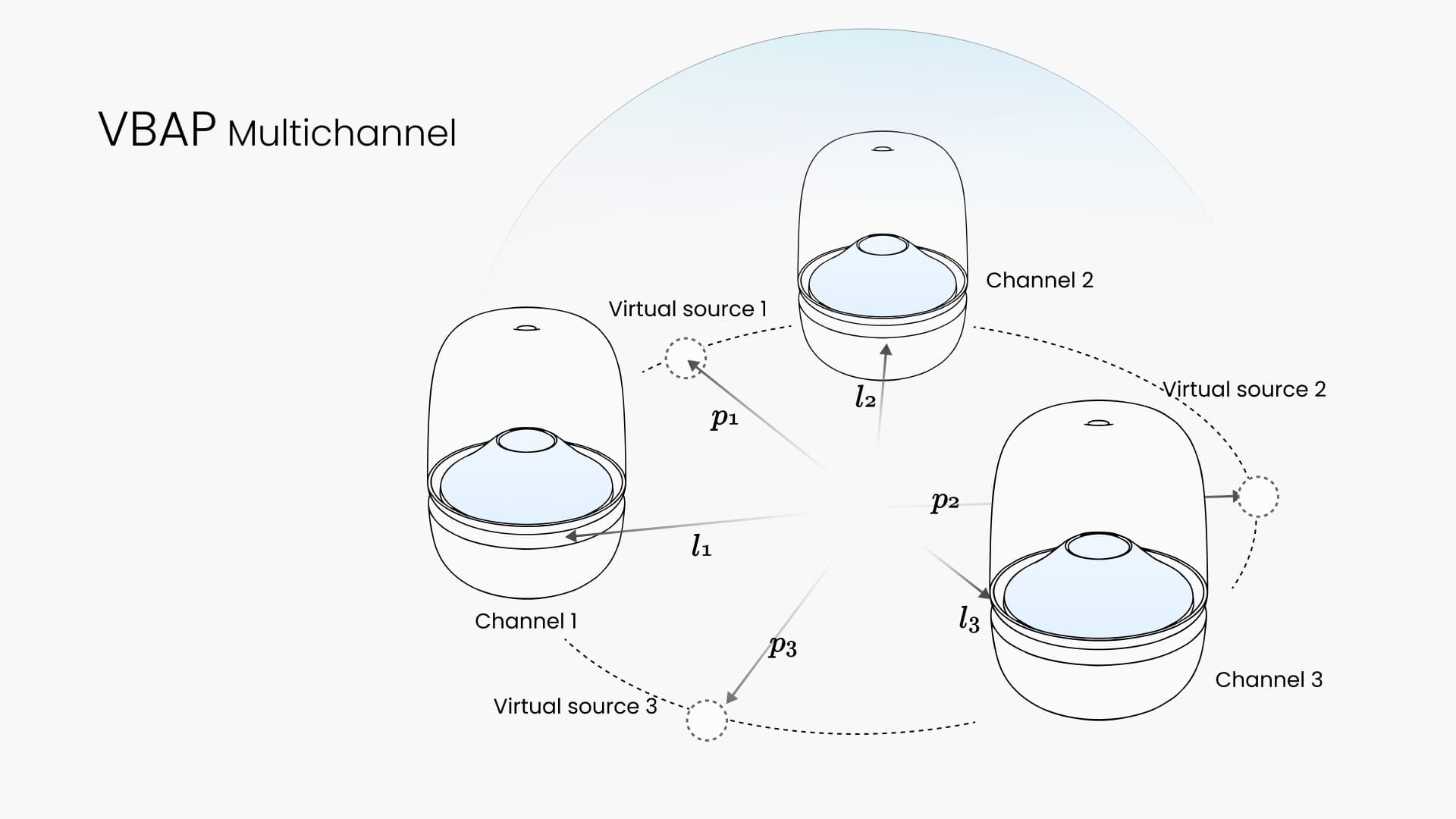
I developed an ambient sound engine for connected Harman Kardon speakers in homes and cars. Multichannel audioMultichannel audio sends different parts of a mix to separate speakers. Instead of placing everything between a left and right speaker, the designer can use locations around the room. That makes speaker placement part of the listening experience.Further readingDolby: speaker setup guides supports sound placement around the listener.
Spatial positioning
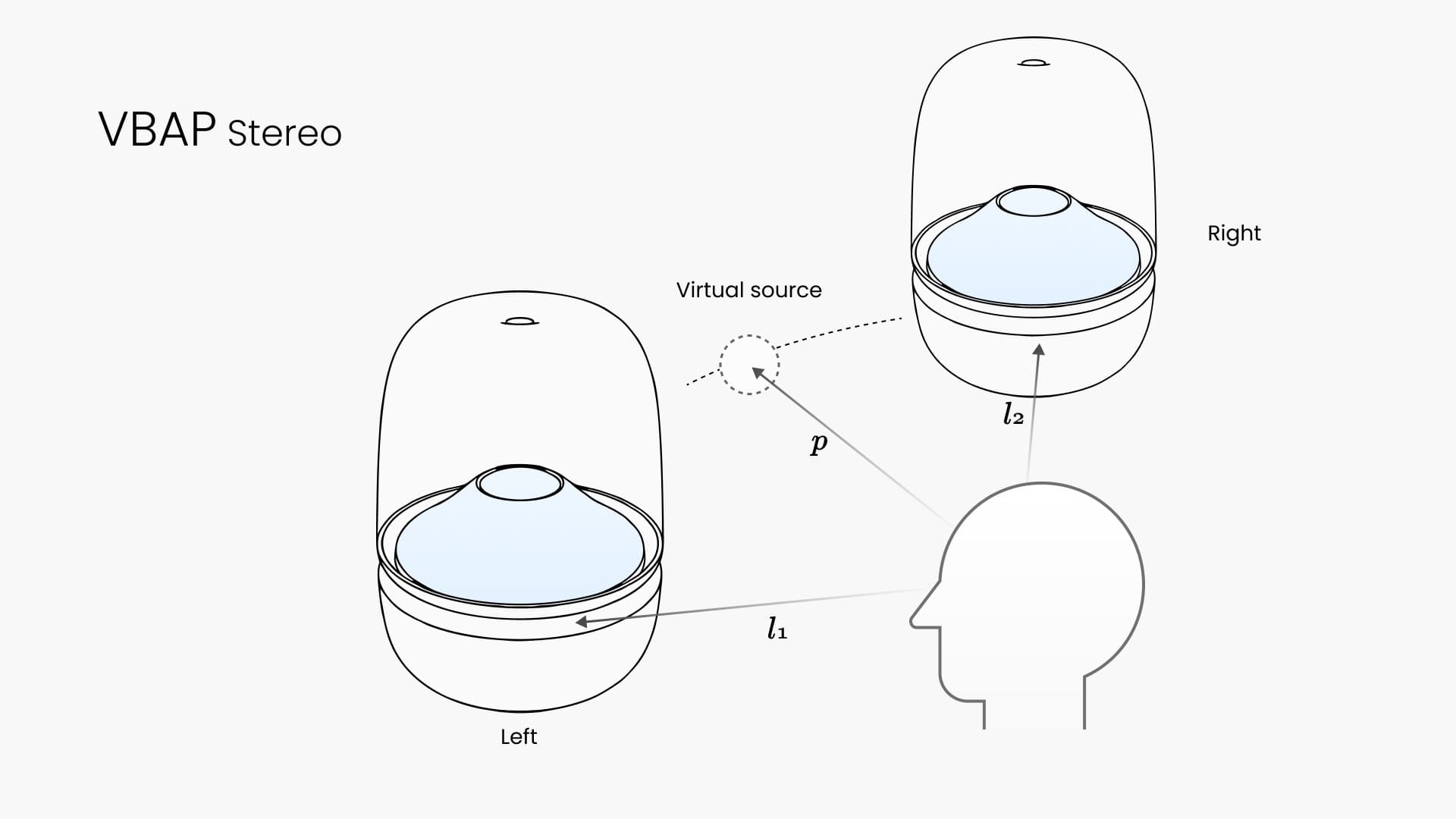
I used VBAP · Vector Base Amplitude PanningVBAP stands for Vector Base Amplitude Panning. It changes the relative volume of nearby speakers so a listener hears a sound between them. In this project, that lets a sound move smoothly around the listener; the designer can shape a sense of motion without physically moving a speaker.Further readingPulkki — Virtual Sound Source Positioning Using VBAP, 1997 to position sounds between speakers and adjust their direction continuously. This supports moving sound sources within an ambient scene.
Sound layers
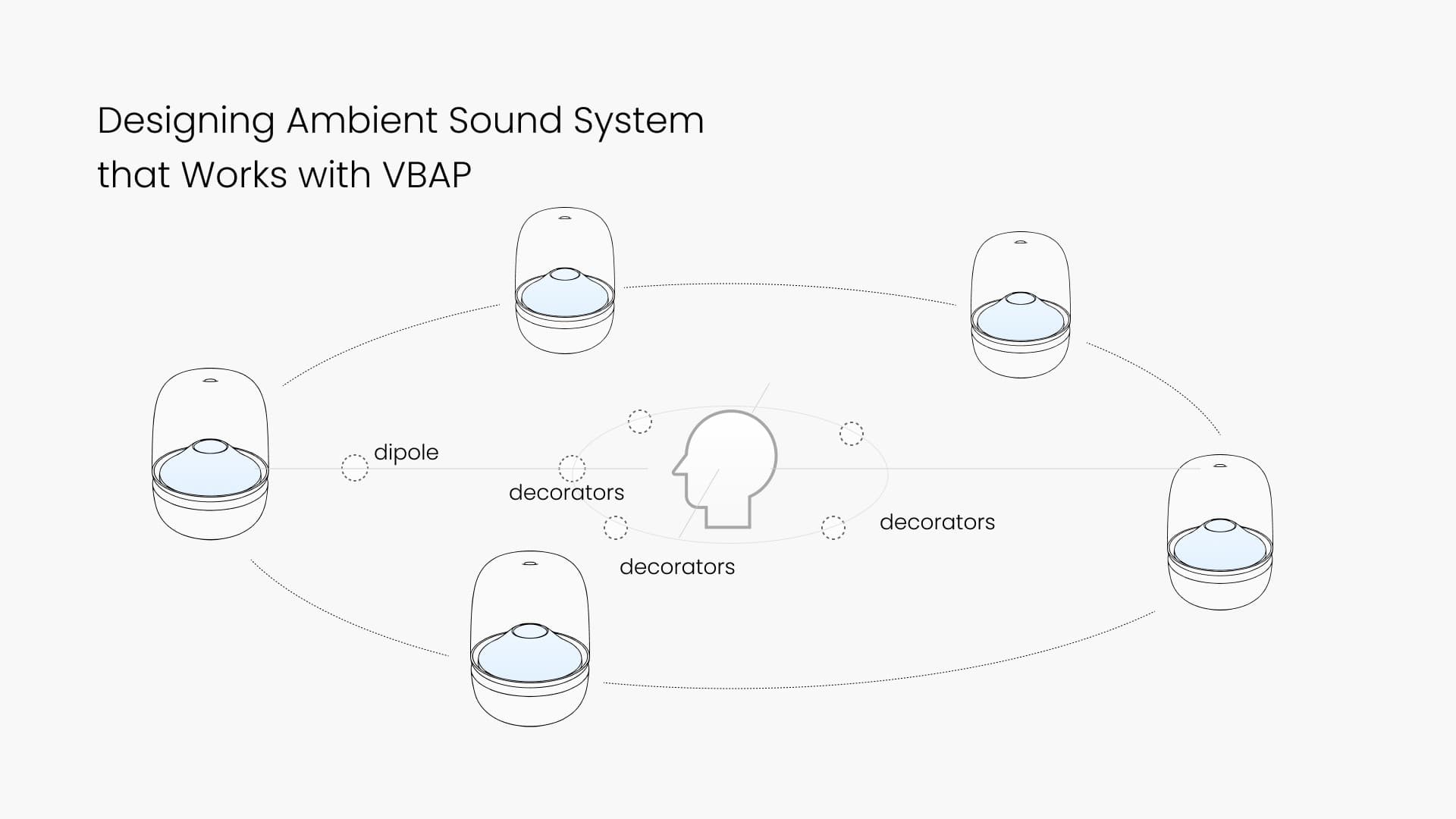
I organized each scene into background, moving sounds, and intermittent events. Each layer can be composed and adjusted separately:
- Bed: a steady background that holds the atmosphere together.
- Dipole: a directional layer that can move around the listener.
- Decorator: a small sound event that adds a point of interest.
Real-time controls
I built a web controller with volume, speed, and position controls for each layer. Adjustments are audible while the scene plays.
The sliders map to expressions that control sound behavior. This allows composition changes without editing the rendering code each time.
For example, volume and movement speed can be adjusted independently and evaluated within the full scene.