Material experiments
I tested engraved wood as a surface for sound interaction.
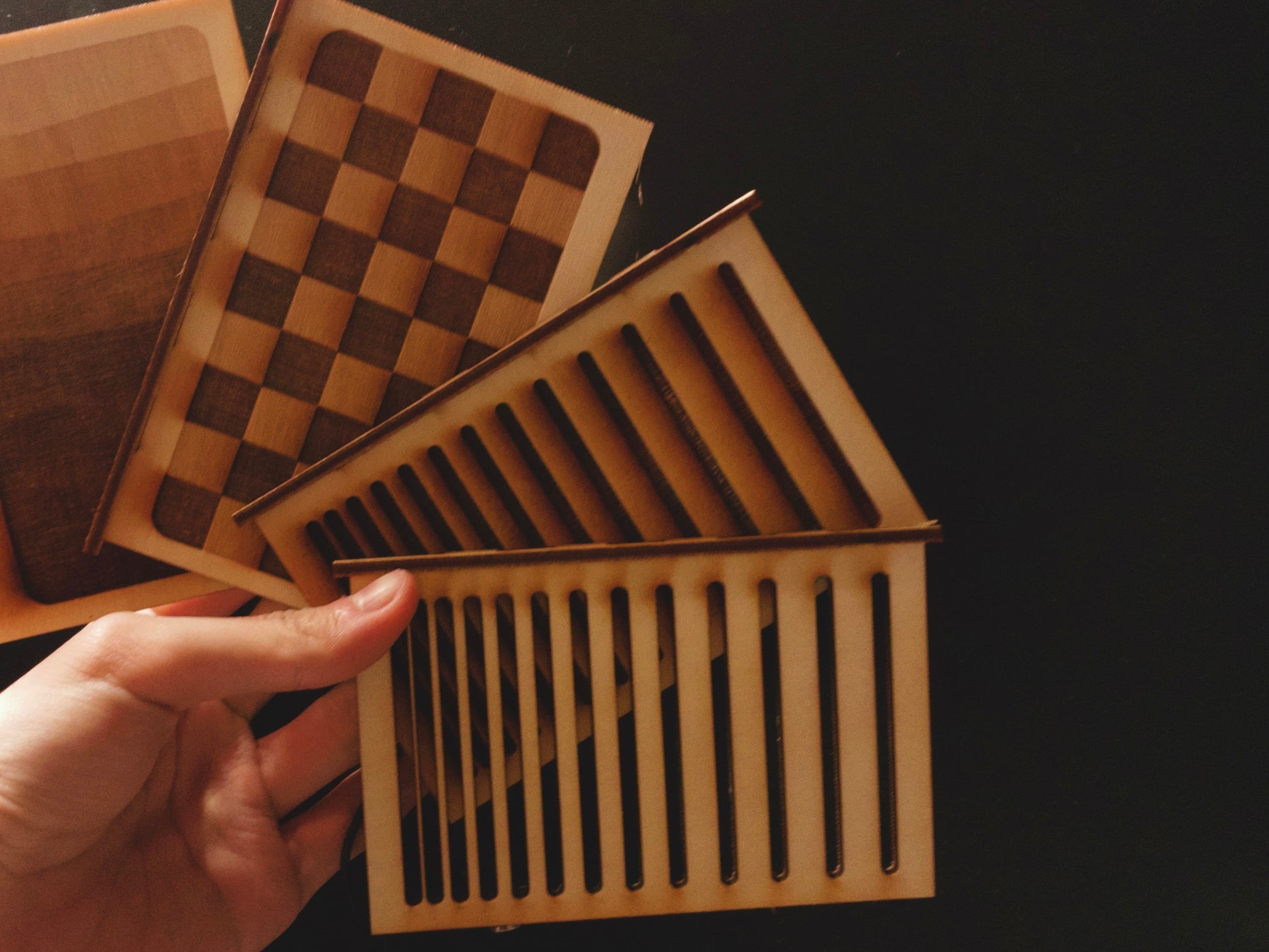
I laser-engraved pine boards with different depths and patterns to compare their tactile properties.
I built a box with an engraved lid as a resonance chamber and attached a contact microphone to capture vibrations.
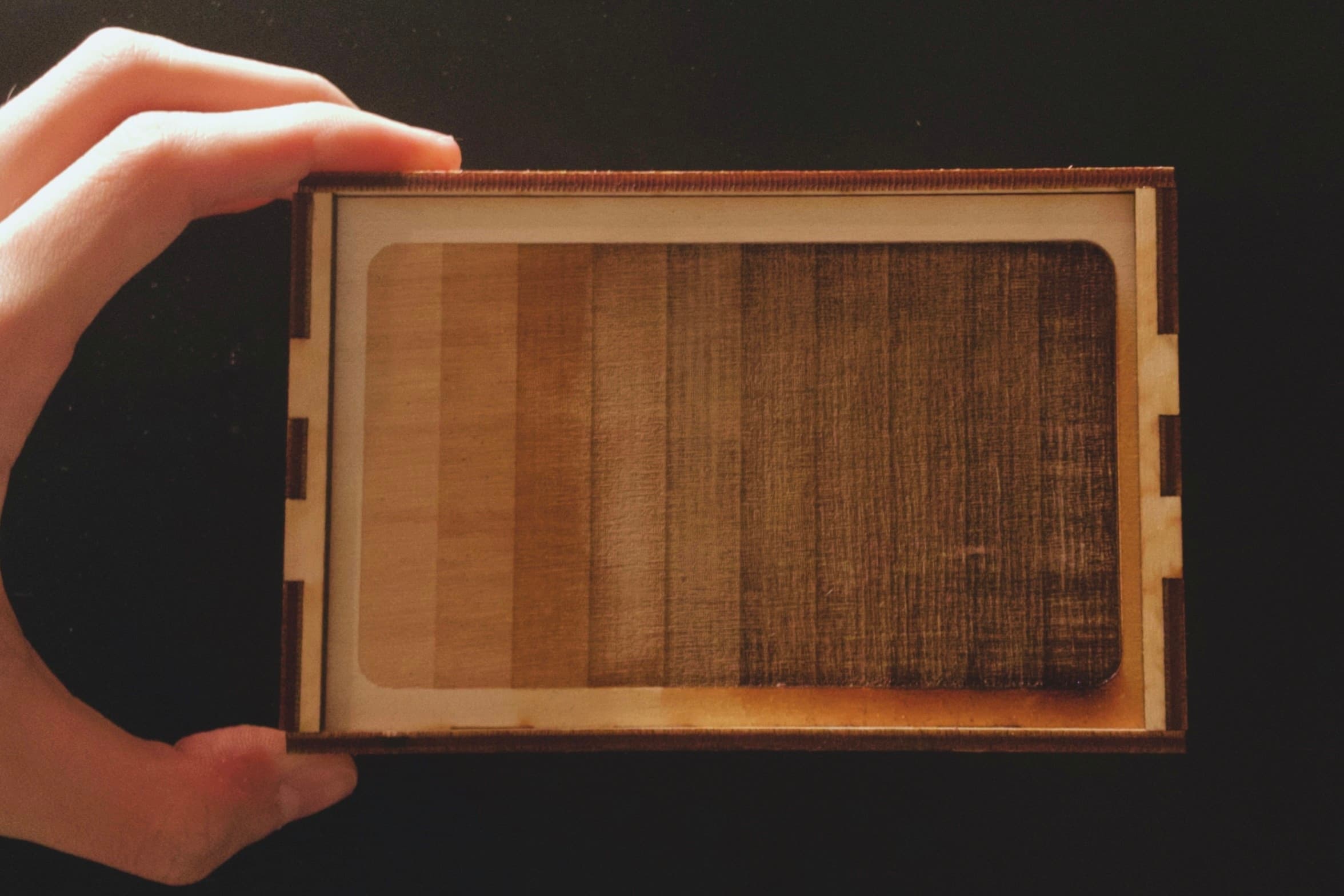
I tested scraping, tapping, dragging, and pressing to compare the sounds produced by different gestures.
Participant trials showed that pattern, engraving, and touch technique all affected the interaction.
Denser patterns felt more resistant during some gestures, while other areas responded to lighter touch.
The tests showed that engraving affected both tactile response and sound production, so it became part of the interaction design.
Participants used different playing techniques. I retained some Open-ended interactionAn open-ended interaction leaves room for more than one way to play. A texture can invite tapping or scraping without prescribing a single gesture. In Driftwood, that uncertainty is part of what encourages someone to listen and try again.Further readingGaver, Beaver & Benford — Ambiguity as a Resource for Design, CHI 2003 in the response to allow multiple approaches to playing the instrument.
Driftwood prototype
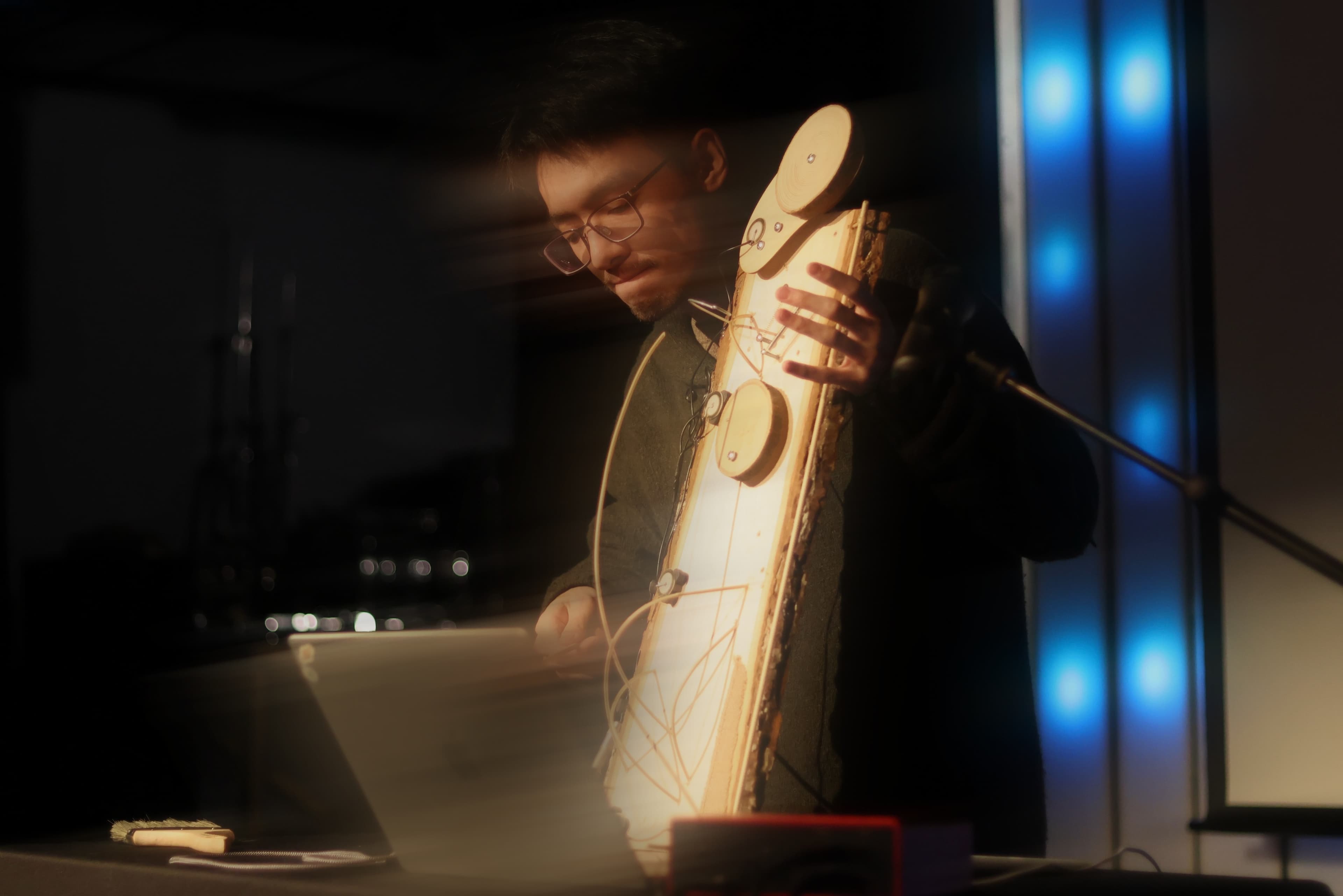
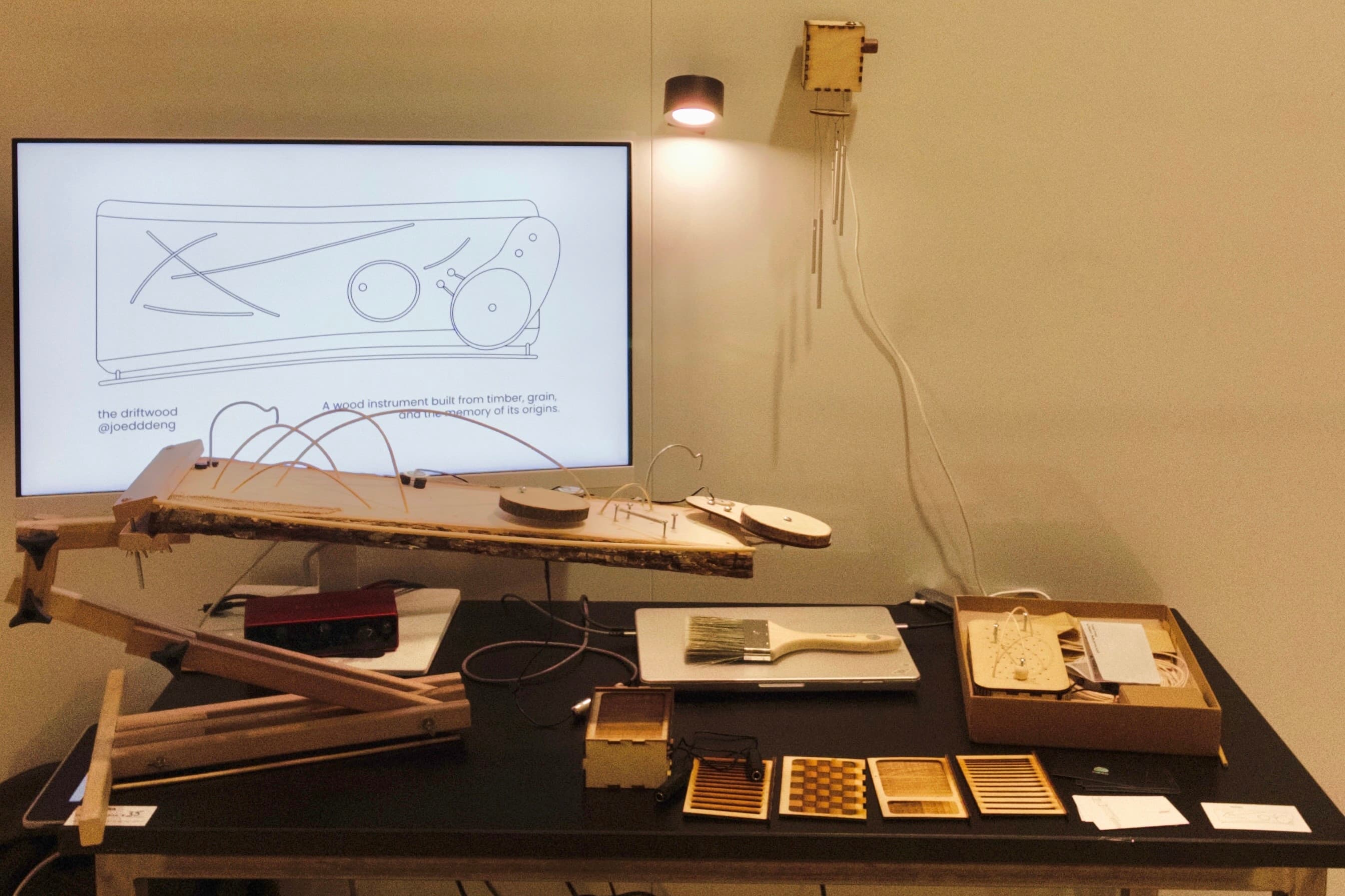
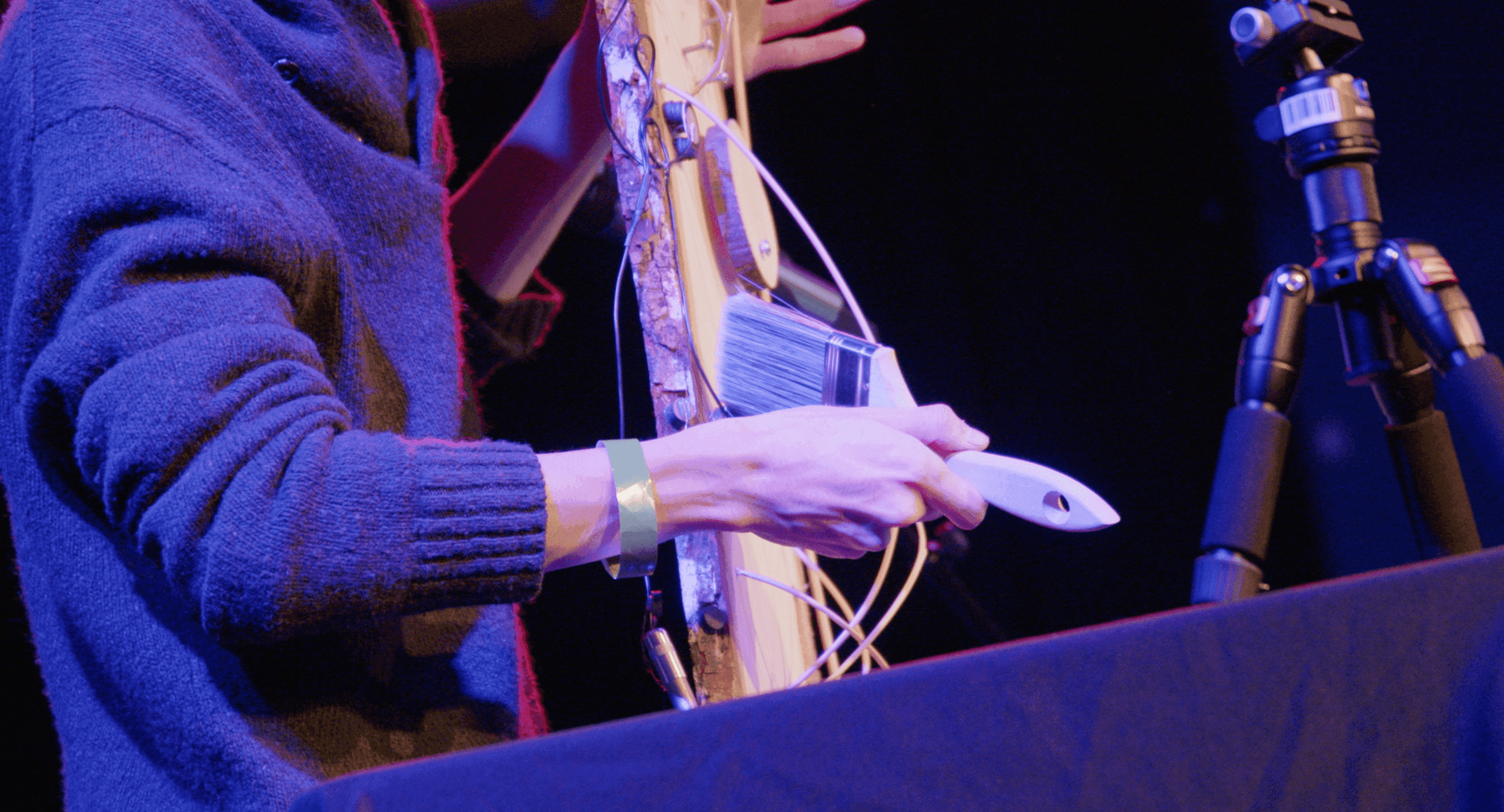
I developed the experiments into Driftwood, using a larger basswood structure suitable for rehearsal and performance.
Rods, plates, strings, and friction surfaces provide different vibration responses and force requirements.
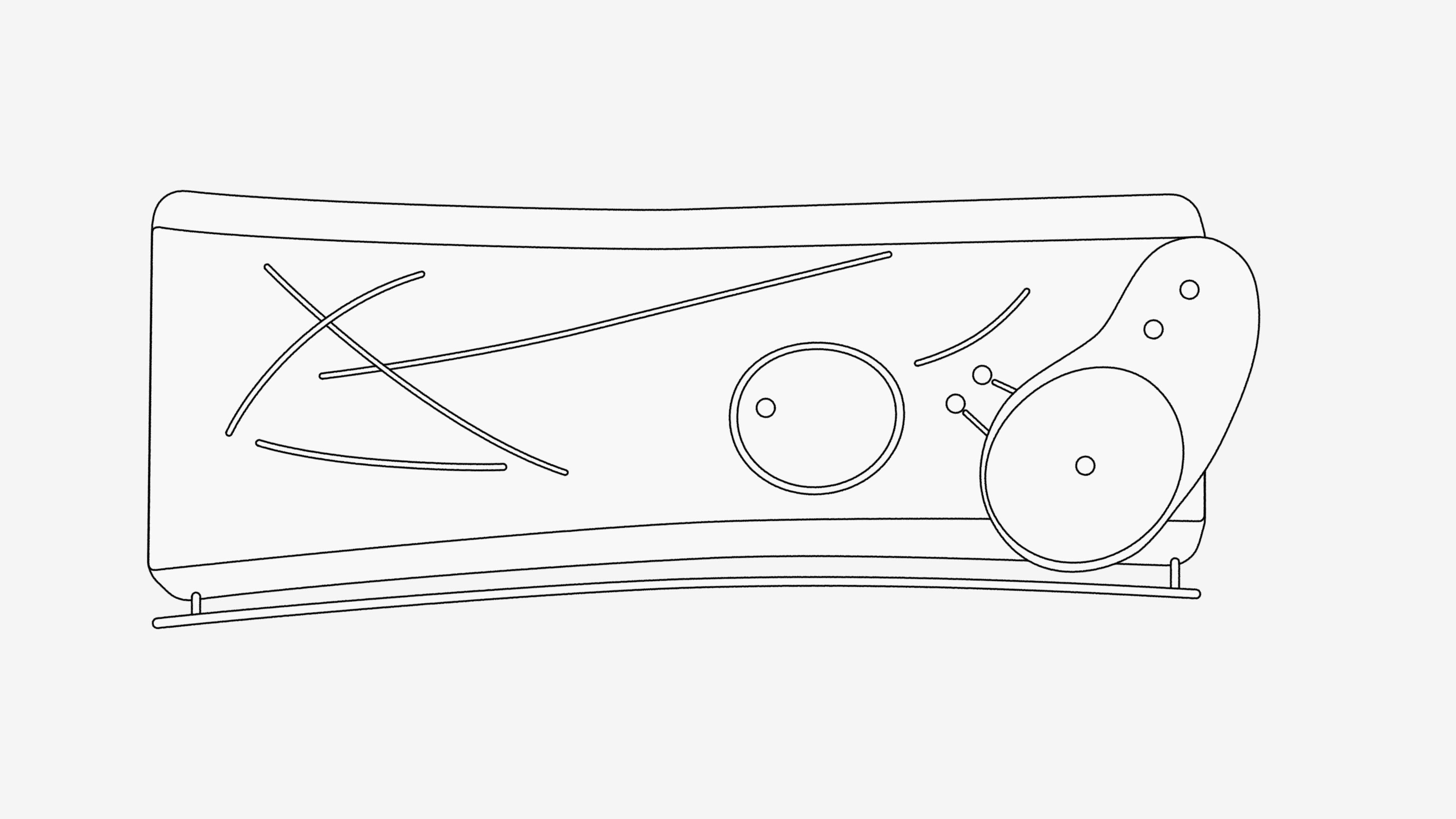
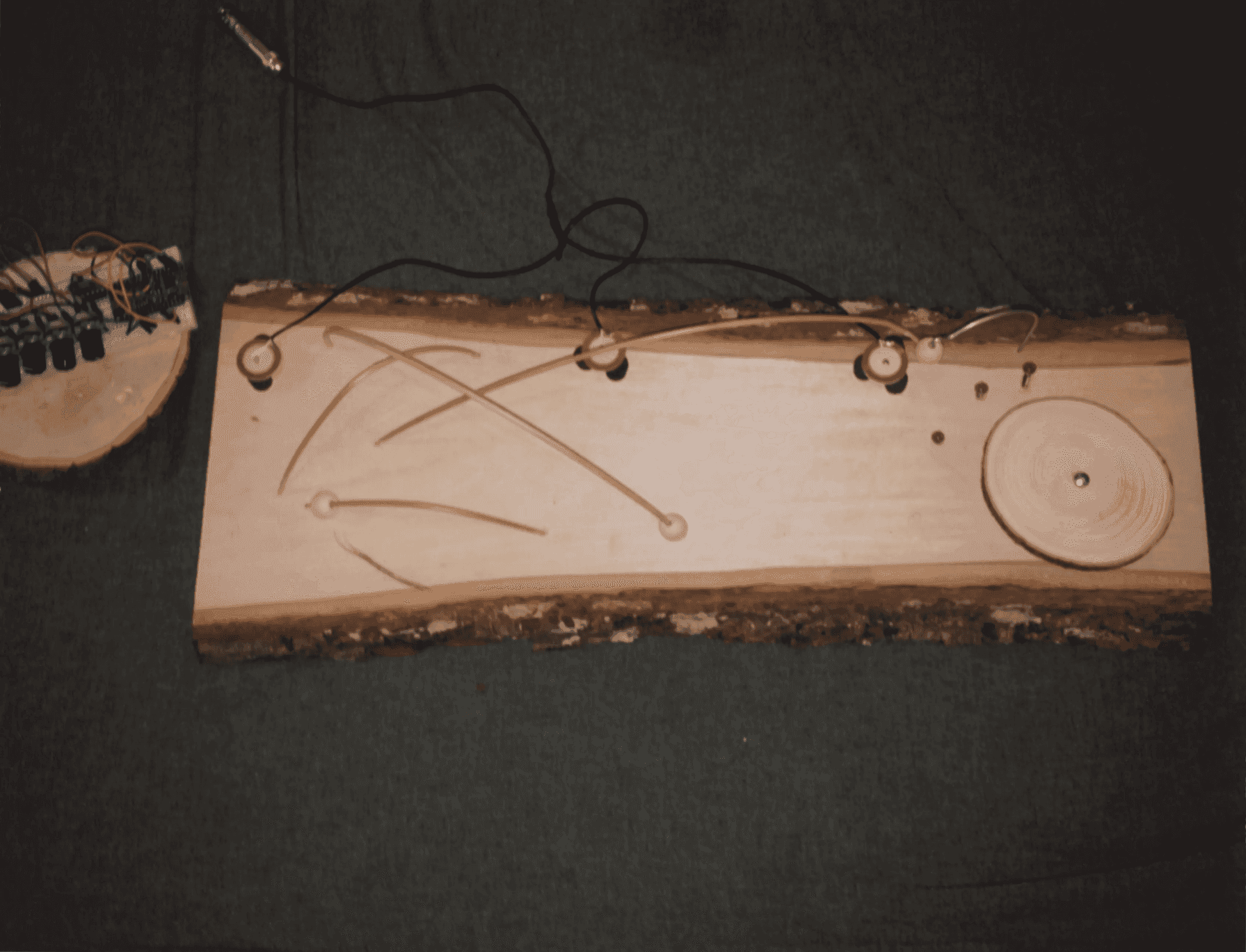
Three contact microphones send vibrations to Ableton LiveAbleton Live is software for making and performing music. A project contains separate tracks and editable clips, rather than one finished recording. It appears in this portfolio as both a production tool and a familiar workspace that can inform interaction design.Further readingAbleton Live. A custom Max/MSPMax/MSP is a visual environment for building interactive sound tools. Connecting small processing blocks lets a designer try how a gesture might change a sound. Here it is a prototyping tool, not something the audience needs to learn.Further readingCycling ’74: Max documentation resonator processes the recorded material.
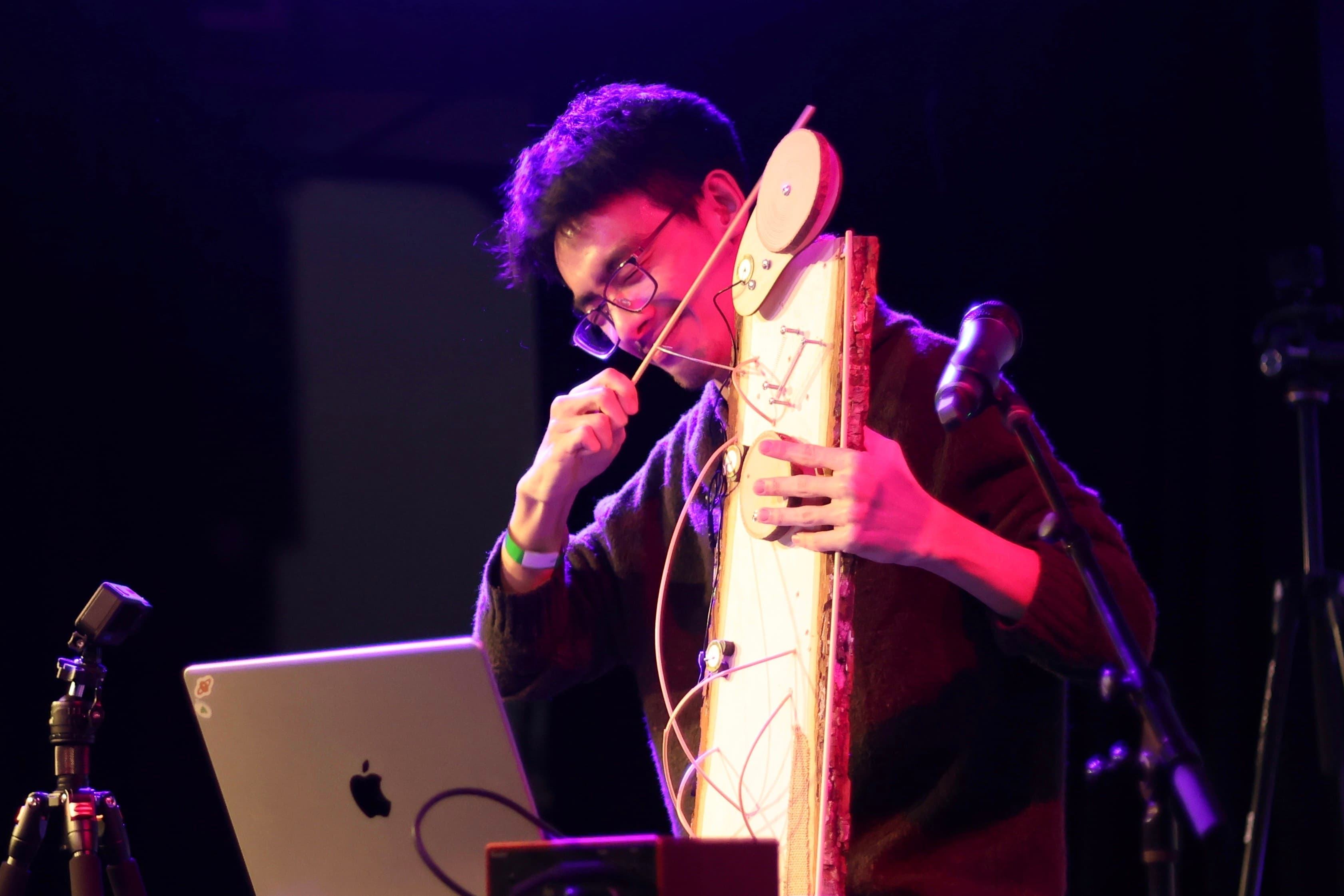
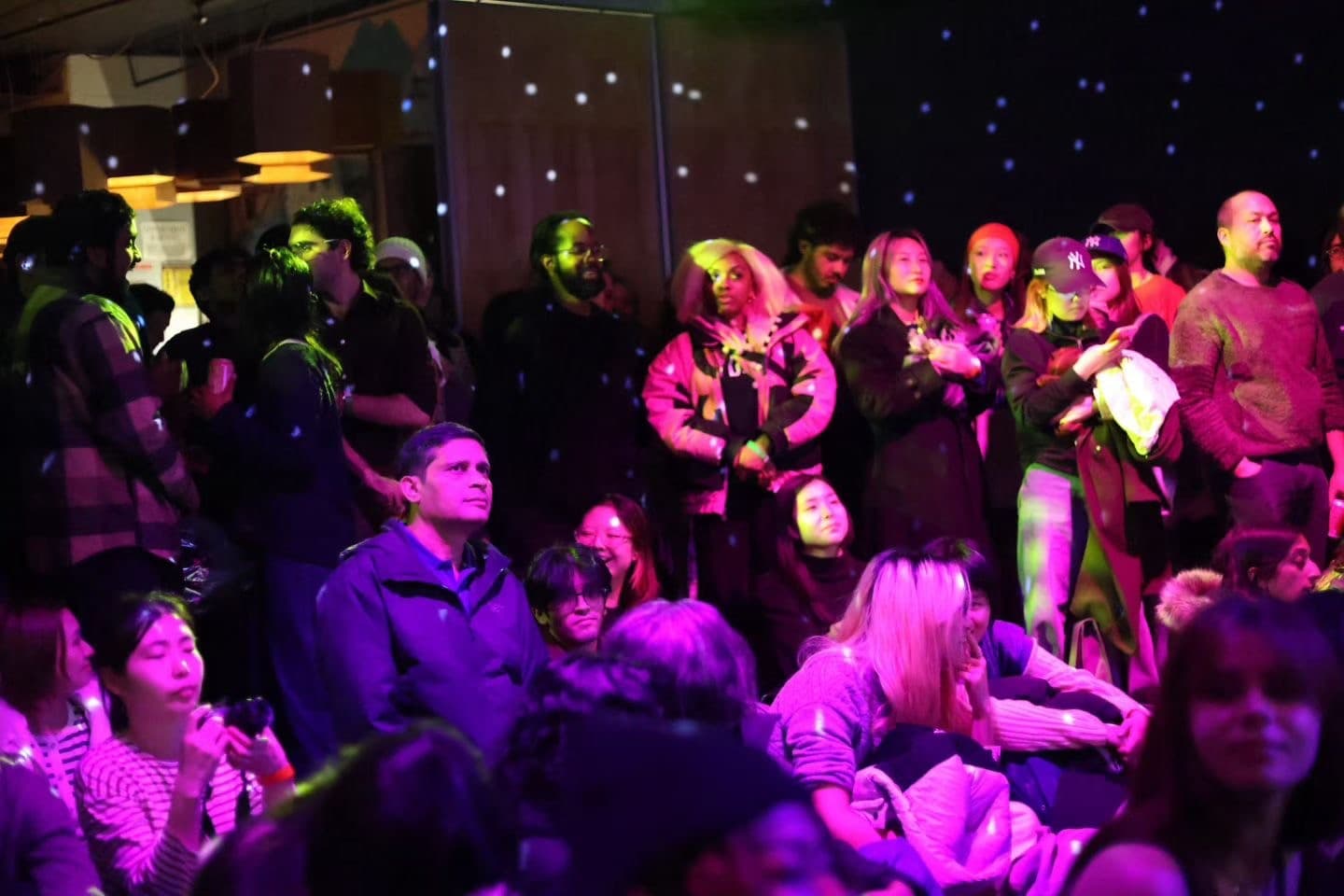
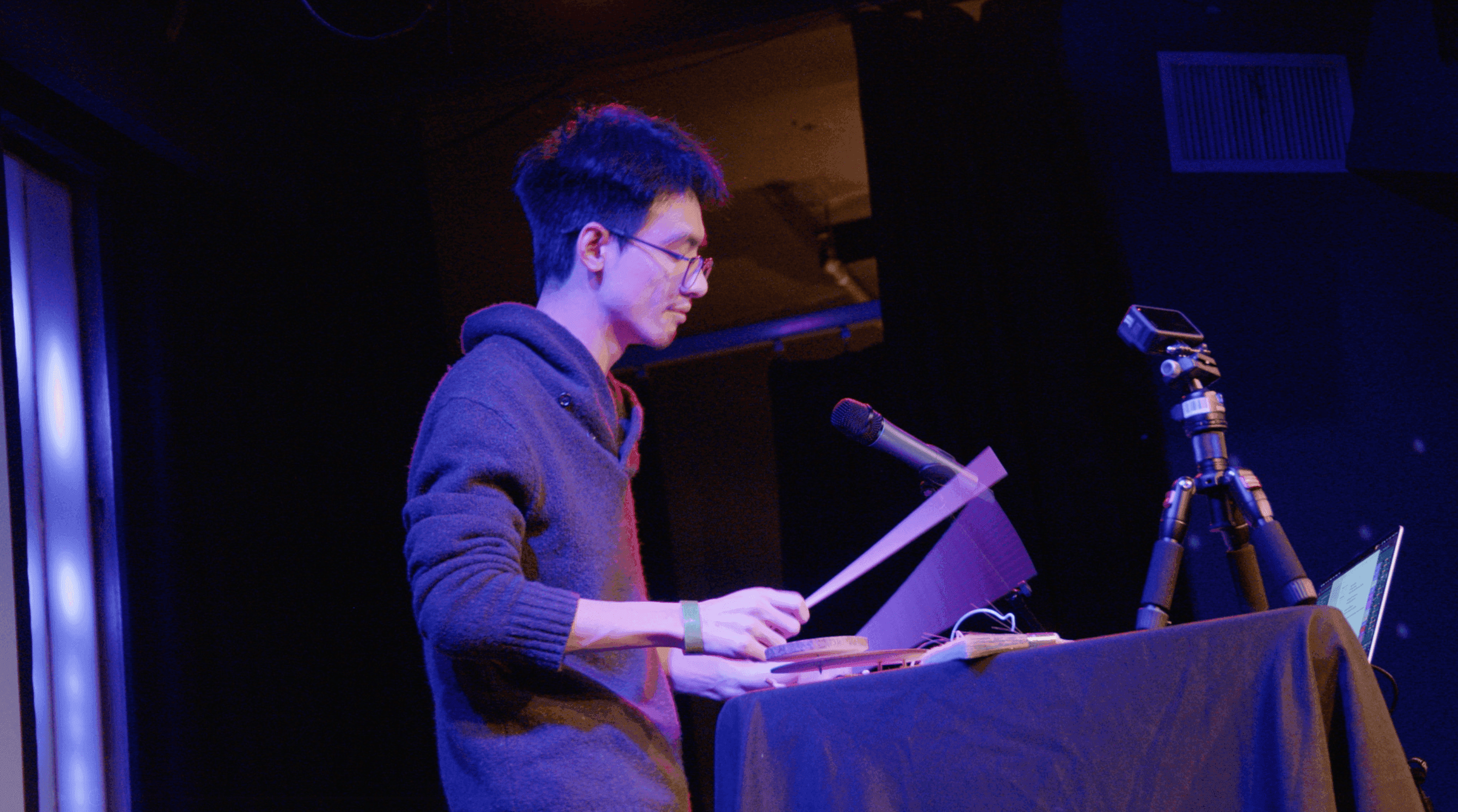
I performed Driftwood at Littlefield NYC in December 2025. Rehearsals tested variations in gesture, material response, and sound processing.
TapTap: a modular kit
Driftwood was large and fragile, which limited use beyond my own performances. I developed a smaller kit for other participants to assemble and play.
The resulting kit is called TapTap.
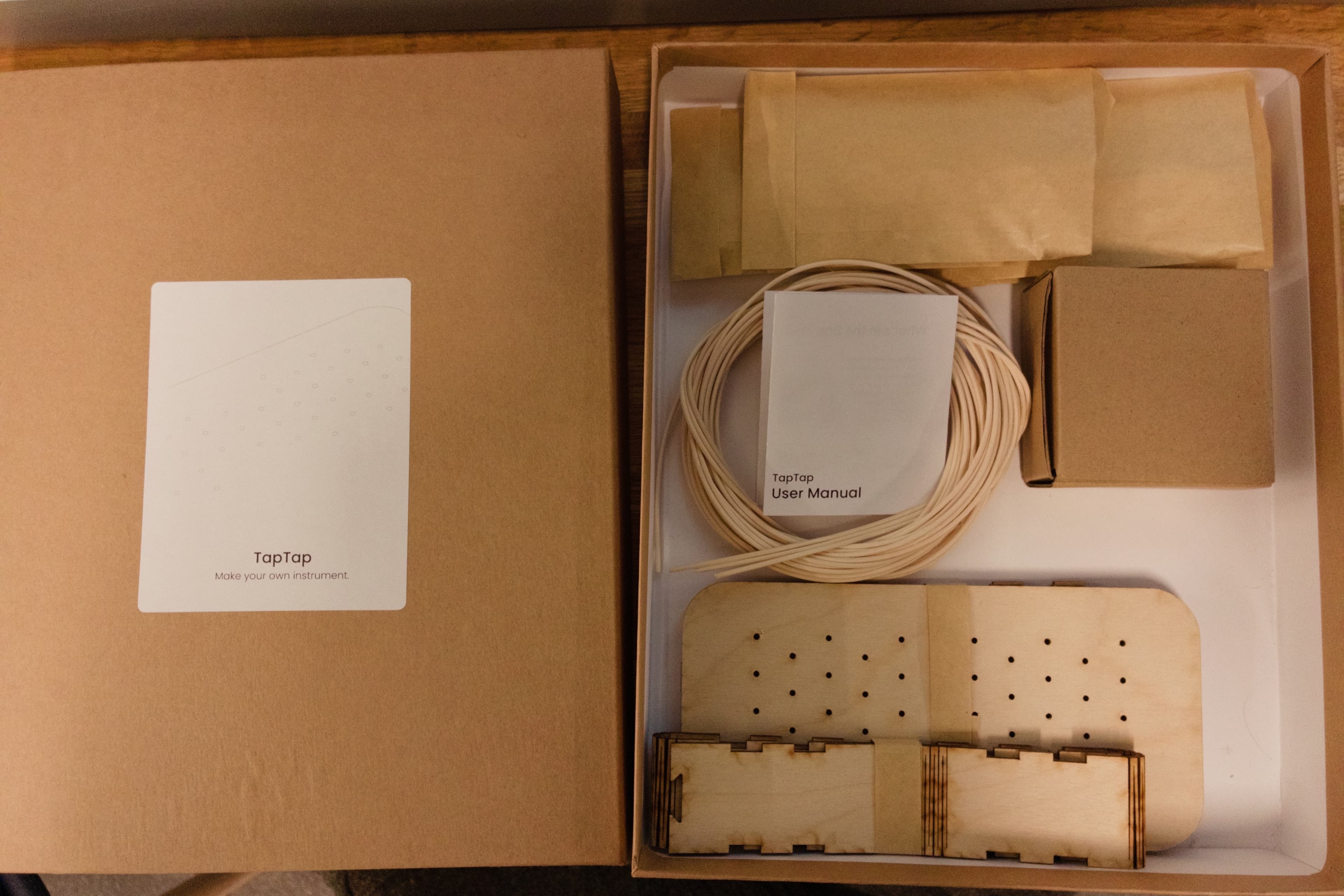
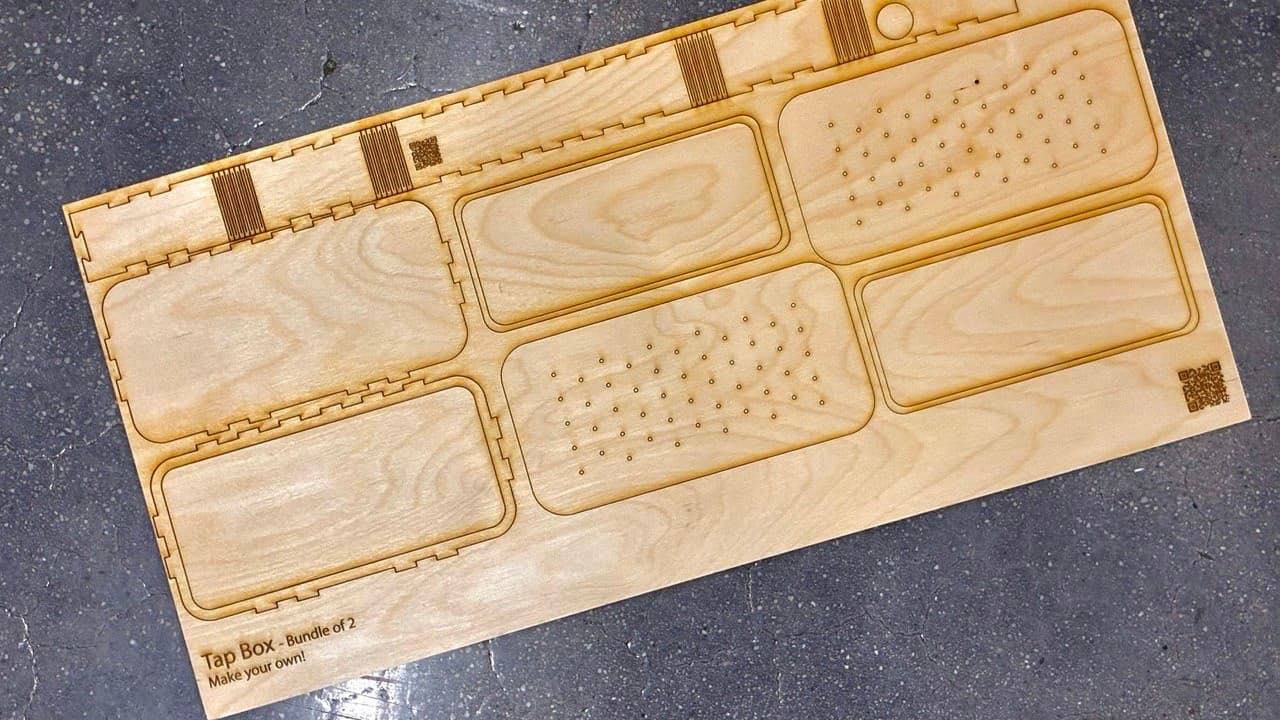
TapTap uses a pre-drilled base with configurable sticks, textures, and attachments. Participants assemble the surface and test different playing techniques.
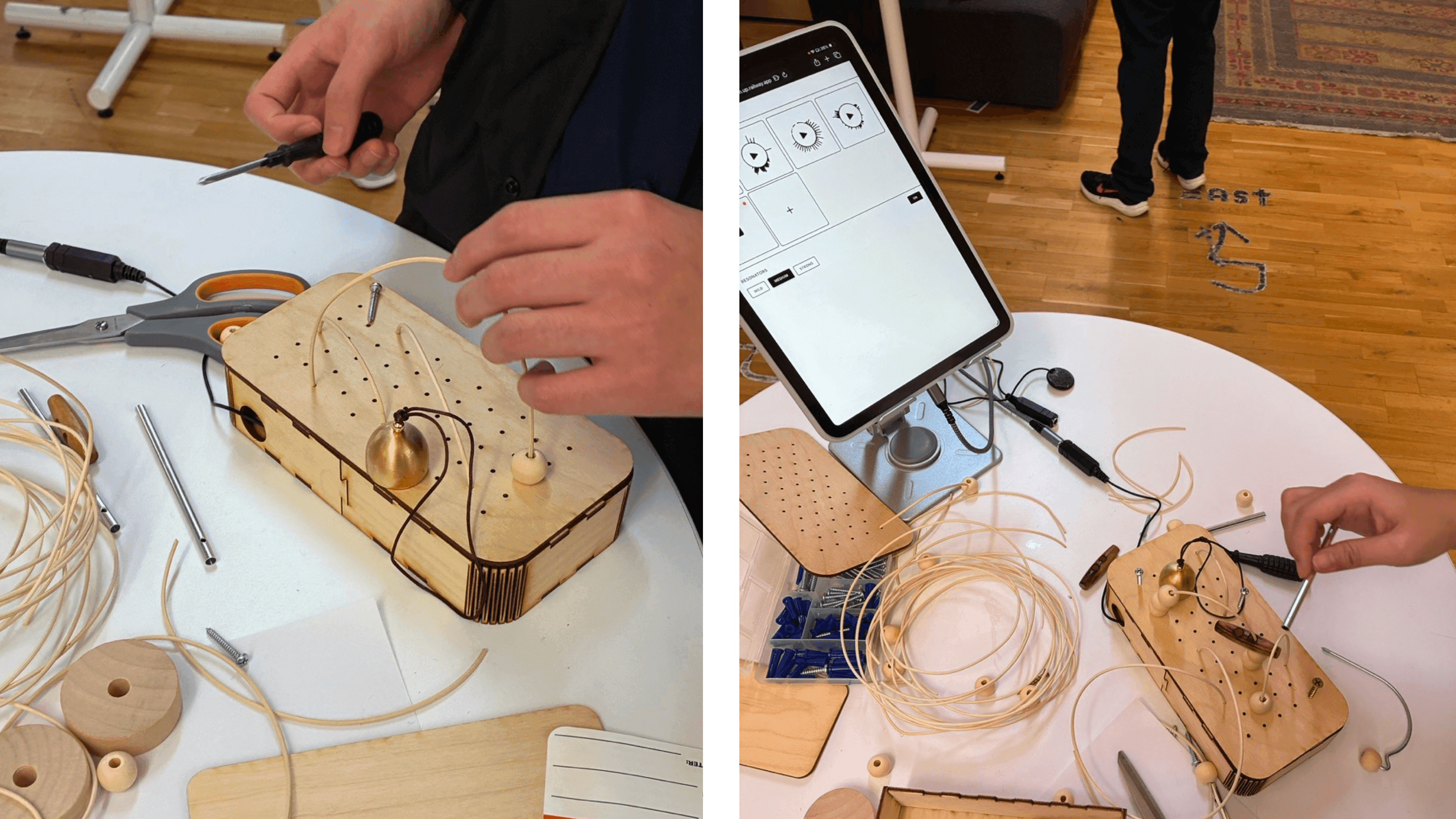
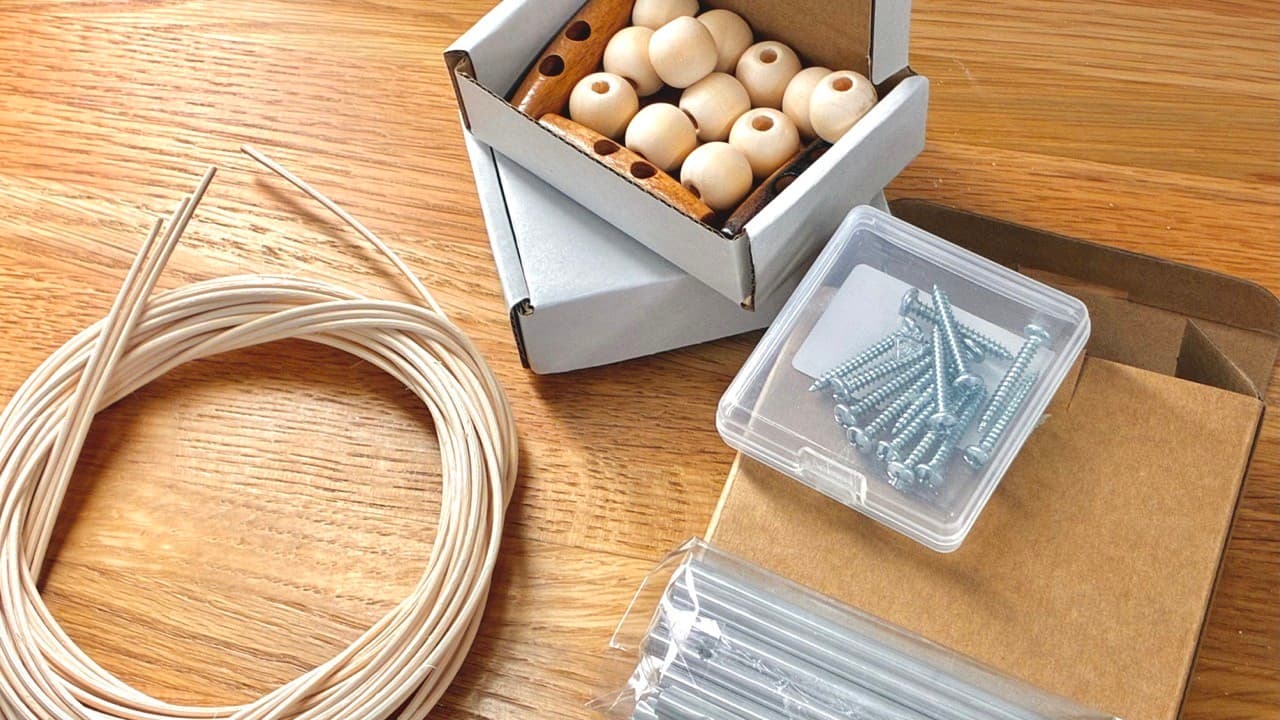
The kit uses chopsticks, household objects, and locally laser-cut wooden parts. Cardboard can replace some parts to reduce material requirements.
Recording and effects
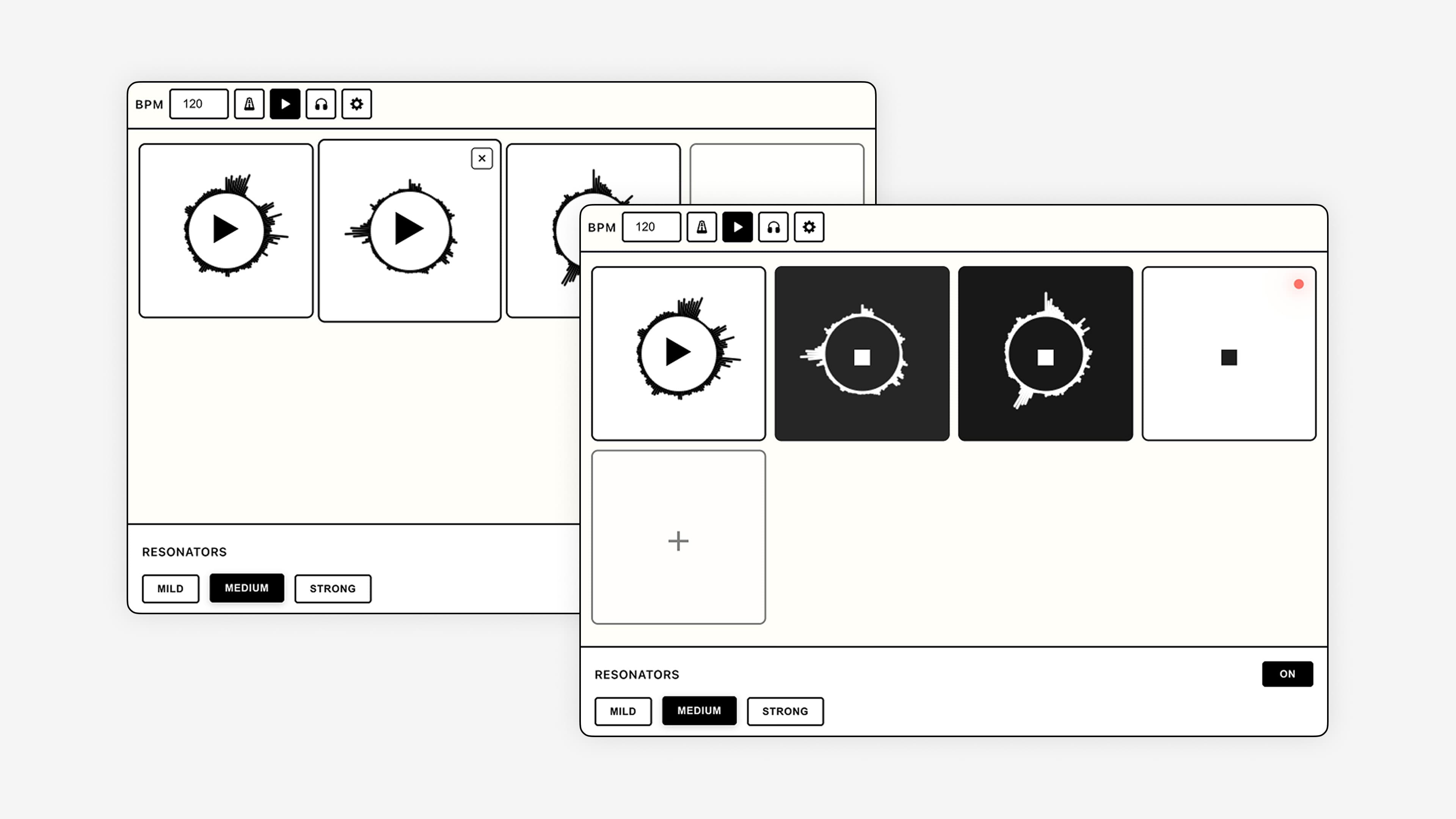
A QR code opens a web interface for recording and effects, providing audio processing alongside the physical instrument.
The project examines how surface texture, physical construction, and gesture affect sound interaction.